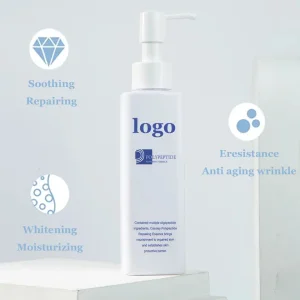
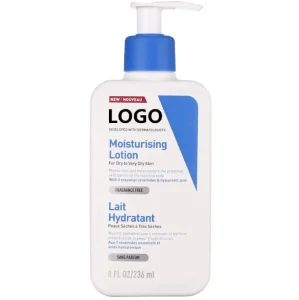
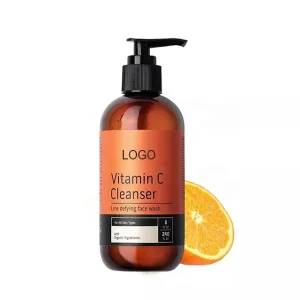
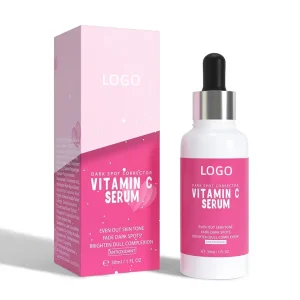
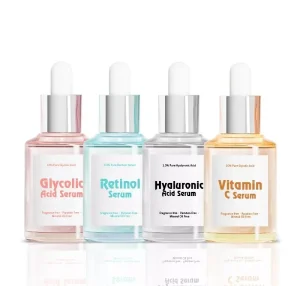
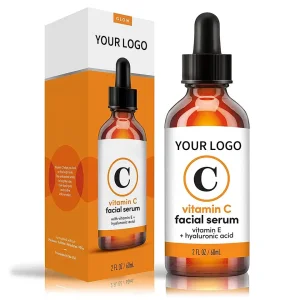
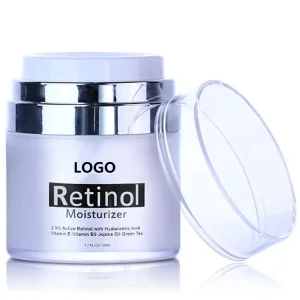
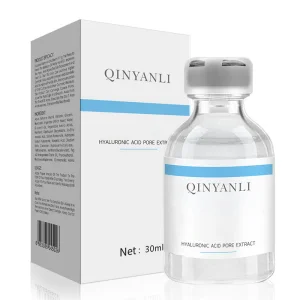
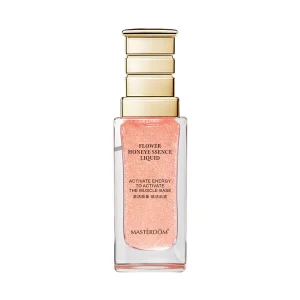
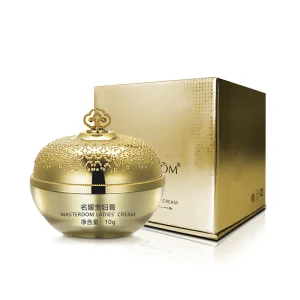
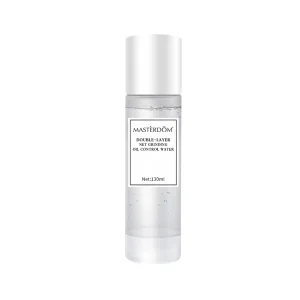
Formulated with advanced bio-actives engineered to endure high UV indices and provide rapid cellular barrier recovery across South African climate zones.
South Africa represents the most sophisticated and economically lucrative personal care market on the African continent, serving not only its 60+ million domestic populace but also operating as the primary gateway into the broader Southern African Development Community (SADC). For private label brand owners, clinical spas, dermatologists, and retail conglomerates targeting corporate entities like Clicks, Dis-Chem, and Woolworths, manufacturing effective face cream requires navigating specific dermatological and commercial challenges.
The Southern African climate imposes acute physiological stresses on facial skin. Intense solar radiation (averaging UV indices of 8 to 12 across provinces such as Gauteng, Mpumalanga, and the Karoo) triggers accelerated photo-aging, degradation of extracellular matrix proteins, and endemic Post-Inflammatory Hyperpigmentation (PIH), particularly within melanin-rich skin profiles (Fitzpatrick phototypes IV through VI).
Simultaneously, dramatic geographic microclimates—ranging from the bone-dry, high-altitude arid Highveld of Johannesburg to the subtropical humidity of coastal KwaZulu-Natal—require distinct formulation textures. Modern South African consumers demand lightweight, non-comedogenic creams that restore the skin lipid barrier without imparting an occlusive, greasy residue.
Domestic manufacturing within South Africa frequently confronts structural bottlenecks, including volatile raw material import costs, fluctuating power grids (load shedding disruption), and limited localized emulsifier production lines. As a result, premier South African brands partner with high-precision international smart factories to ensure:
Bridging clinical dermatology and cosmetic chemistry to build multi-target formulations addressing barrier integrity, melanogenesis inhibition, and non-comedogenic solar resilience.
Transepidermal Water Loss (TEWL) spikes significantly under high-evaporation atmospheric conditions. Our R&D laboratory employs physiological lipid architectures mimicking the natural stratum corneum:
Treating hyperpigmentation in melanin-rich skin demands active non-cytotoxic inhibition of tyrosinase without causing the rebounding discoloration linked with historical hydroquinone usage:
Enhancing formulation storytelling and consumer resonance by synergizing globally validated biotechnology with indigenous African botanical powerhouses:
A battle-tested 5-phase engineering methodology guaranteeing formulation reproducibility, packaging durability, and seamless customs entry into Durban and Cape Town.
| Workflow Phase | Technical Objective | Key Deliverables for Brand Owner | Timeline Benchmark |
|---|---|---|---|
| Phase 1: Dermocosmetic Briefing | Formulation profiling, INCI screening against South African restrictions, viscosity and sensory benchmarking. | Target INCI list, stability feasibility assessment, initial packaging feasibility brief. | Days 1 – 5 |
| Phase 2: R&D Iteration & Lab Sampling | Precision batch compounding in cleanroom pilot facilities; texture, spreadability, and absorption fine-tuning. | 3x custom formula sample variations with varied active percentages sent via air courier for physical trial. | Days 6 – 14 |
| Phase 3: Stress Stability & Packaging Compatibility | Thermal cycling testing (45°C / 85% RH and freeze-thaw cycles), pump actuation torque, container leak testing. | Accelerated Stability Report, Preservative Efficacy Testing (PET), Bottle/Jar hermetic seal verification. | Days 15 – 30 |
| Phase 4: Regulatory Dossier & Mass Compounding | Bulk vacuum emulsification (up to 5-ton batches), high-speed multi-head filling, label artwork inspection. | Batch Certificate of Analysis (COA), Safety Data Sheets (SDS), EU/SAHPRA aligned technical file. | Days 30 – 42 |
| Phase 5: Global Logistics & Port Clearance | Export packing in heavy-duty export corrugated cartons, pallet shrink-wrapping, ocean/air documentation prep. | Bill of Lading (B/L), Certificate of Origin (COO), direct consolidation to Durban / Cape Town / OR Tambo. | Transit: 22–30 Days (Ocean) |
Exporting private label cosmetic formulations to South Africa requires strict adherence to regulatory boundaries administered by the South African Health Products Regulatory Authority (SAHPRA) under the Medicines and Related Substances Act (Act 101 of 1965), as well as consumer protection standards coordinated by the Cosmetic, Toiletry and Fragrance Association of South Africa (CTFA) and the South African Bureau of Standards (SABS).
Our manufacturing plant provides fully transparent documentation to shield brand owners against regulatory delays, product seizures, or retail auditing rejections:
1. Cosmetic vs. Borderline Medicine Classification: Careful auditing of packaging claims ensuring your face cream is positioned as a cosmeceutical without overstepping into therapeutic medicinal claims requiring drug registration.
2. Ban on Prohibited Additives: Complete absence of Hydroquinone, Corticosteroids, Mercury, and prohibited parabens, aligned with strict Annex II/III EU-style adaptations adopted by South African authorities.
3. Comprehensive Technical Dossier: Every production batch leaves our loading dock with Certificate of Analysis (COA), 16-point Safety Data Sheet (SDS), and preservative efficacy documentation.
The South African Revenue Service (SARS) customs clearance process requires unambiguous harmonization codes and compliant commercial invoices. We supply:
Directly operating two state-of-the-art production sites: Guangzhou Aoyan Cosmetics Co., Ltd. and Guangzhou Xinzimei Cosmetics Co., Ltd., delivering industrial scale and zero-middleman pricing.
Equipped with computerized German-engineered homogenizing emulsifiers achieving particle dispersion below 1.5 microns. This ensures face creams exhibit silk-like glide, immediate epidermal wetting, and zero phase separation during transit.
Direct supply partnerships with tier-1 tooling and molding centers. We provide luxury heavy-wall acrylic jars, airless pumps that safeguard unpreserved biological peptides, multi-layer laminated tubes, and fully recyclable PCR components.
Accelerate your speed-to-market. While domestic toll manufacturers often demand high minimum volume commitments, our agile manufacturing cells support entry private label orders starting from 1,000 units with 15-day batch turnaround.
Select the production channel tailored to your capital structure, product launch timeline, and brand intellectual property strategy.
| Procurement Vector | ODM: Fast-Track Ready Formulas | OEM: Full Custom Chemical Synthesis | Bulk Concentrate Export (Drums) |
|---|---|---|---|
| Primary Target | Indie brands, influencers, clinics testing market demand rapidly. | Established cosmetic houses, luxury clinical lines, retail chains. | Domestic SA fillers with existing bottling infrastructure. |
| Formula Selection | Selection from 3,500+ pre-stabilized master formulas. | Bespoke chemistry built around signature client actives. | Finished bulk base delivered in 50kg / 200kg IBC containers. |
| Minimum Run (MOQ) | 1,000 – 3,000 units per SKU | 5,000 – 10,000 units per SKU | 100 kg minimum order weight |
| Custom Tooling | Standard catalogue luxury jars & custom silk screening. | Full custom-molded caps, bespoke embossing, custom pumps. | N/A (Packed in UN-certified transport drums). |
| Time to Market | 3 to 4 Weeks from artwork signoff | 8 to 12 Weeks (Includes clinical stability testing) | 2 Weeks manufacturing lead time |
Engineered for high compatibility across diverse retail and medical aesthetic channels in Johannesburg, Cape Town, Pretoria, and Durban.
Clear, technically rigorous answers covering compliance, formula adaptation, container shipping, and operational minimums.
Partner directly with an ISO 22716 / GMPC certified manufacturing plant. Obtain factory-direct pricing, sample evaluations, and complete regulatory dossier packages for South African distribution.