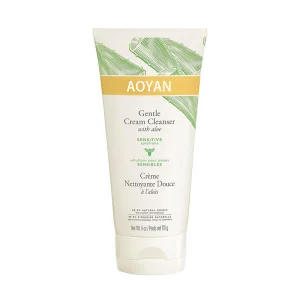
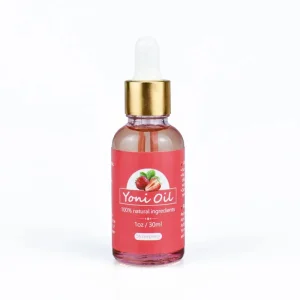
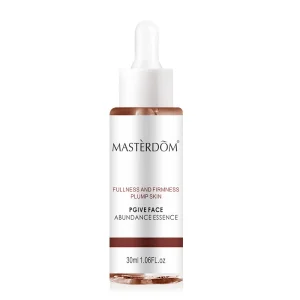
Direct factory production lines with adaptable base matrices, customizable active payloads, and scalable packaging compatibility for international beauty retail.
An empirical evaluation of market dynamics, shifting regulatory requirements, and technical hurdles reshaping contract manufacturing for SPF products.
The global photoprotection market is projected to eclipse $16.8 billion by 2030, transitioning from a seasonal beach-bag convenience to a non-negotiable step in daily clinical preventative skincare. This tectonic shift has expanded brand demand for private label and white label sunscreen ODM solutions capable of delivering ultra-light aesthetic profiles with certified broad-spectrum SPF 30, SPF 50+, and PA++++ claims. Fast-to-market direct-to-consumer (DTC) brands and clinical dermatological practices require factory partners who eliminate the typical 18-month R&D cycle while guaranteeing photostability and compliance.
Legislative bans across Hawaii, Palau, the US Virgin Islands, and Key West targeting legacy chemical filters—most notably Oxybenzone (Benzophenone-3) and Octinoxate (Octyl Methoxycinnamate)—have forced a complete overhaul of sunscreen manufacturing. Contract manufacturing clients now necessitate eco-compliant, reef-safe architectures utilizing either surface-treated non-nano Zinc Oxide or next-generation organic absorbers. As a direct ODM partner, Beaza engineers formulas free from endocrine disruptors, meeting Clean at Sephora, Ulta Conscious Beauty, and EU Eco-cert thresholds.
Commercial brand scaling requires agile procurement mechanics. Multinational distributors and regional filling facilities frequently leverage bulk liquid sunscreen procurement (200kg drums to 1,000kg intermediate bulk containers) to optimize ocean freight economics, mitigate customs duties on packaged goods, and bottle formulas in local facilities. Conversely, emerging prestige brands rely on our end-to-end turnkey ODM process, incorporating proprietary airless pump engineering, screen printing, outer cartoning, and batch analytics within an audited GMPC cleanroom setting.
Overcoming the fundamental friction between high-performance broad-spectrum UV shielding and sensory consumer excellence.
Formulating chemical sunscreens containing Avobenzone (Butyl Methoxydibenzoylmethane) presents severe photo-degradation challenges when exposed to solar radiation. Our chemical engineers implement triplet-state quenching mechanisms via Octocrylene, Polyester-8, or natural photostabilizers such as Ethylhexyl Methoxycrylene. This prevents photo-cleavage, sustaining critical UVA protection factor ratios across 120 minutes of continuous UV exposure while averting the generation of reactive oxygen species (ROS).
Traditional non-nano Zinc Oxide and Titanium Dioxide suffer from particle agglomeration, leading to gritty rheology and visible white chalkiness across Fitzpatrick Skin Types IV–VI. Our cleanroom facilities employ advanced high-shear microfluidization and polyhydroxystearic acid coatings. This ensures uniform particle dispersion below the visible light scattering threshold (producing sheer, transparent, invisible finishes) without breaching the regulatory nano-threshold definitions.
Achieving SPF 50+ without high, greasy active loads is achieved via smart optical boosters. We integrate Styrene/Acrylates Copolymers (hollow sphere pigments) that scatter light back through the active filter layer, effectively boosting SPF values by 30-50% while slashing greasy lipid burdens. Meanwhile, trimethylsiloxysilicate and VP/Eicosene copolymers establish uniform, flexible, water-resistant barriers (tested for 40-minute and 80-minute submersion regimes per ISO 16217 standards).
Sunscreen classification varies dramatically across global territories—from Over-the-Counter (OTC) drugs to cosmetic functional products.
| Target Market | Regulatory Body & Classification | Approved Filter Paradigms | Testing & Labeling Mandates | Beaza Turnkey Documentation |
|---|---|---|---|---|
| United States | US FDA (Over-the-Counter / OTC Drug Monograph) | Primarily 16 GRASE filters; predominantly Zinc Oxide, Titanium Dioxide, Avobenzone, Homosalate, Octisalate. | Critical Wavelength ≥ 370nm, Broad Spectrum testing, FDA NDC registration, Drug Facts panel formatting. | FDA NDC FilingGMPC DossierCOA & Stability |
| European Union & UK | EC No 1223/2009 / UK Cosmetic Regulation | Annex VI Positive List (Bisoctrizole/Tinosorb M, Bemotrizinol/Tinosorb S, Uvinul A Plus, Mexoryl SX/XL). | UVA-PF ≥ 1/3 labelled SPF, Critical Wavelength ≥ 370nm, EU Responsible Person (RP), PIF compilation, CPNP notification. | CPNP SupportPIF DossierCPSR Part A/B |
| Australia | TGA (Therapeutic Goods Administration) - Listed Medicine | Strict AS/NZS 2604:2021 standards; high reliance on Bemotrizinol, Zinc Oxide, micro-fine filters. | Mandatory in-vivo ISO 24444 SPF testing, ISO 24443 in-vitro UVA, 4-hour water resistance validation, ARTG listing. | TGA ComplianceMicrobial TestingPreservative Efficacy |
| China (NMPA) | Special Cosmetic Registration (Anti-Freckle / Sunblock) | CSAR positive catalogue; heavy scrutiny on human patch irritation and clinical SPF/PA human testing. | Human phototoxicity, skin sensitization, human SPF/PFA testing in NMPA accredited national laboratories. | NMPA FilingToxicological RiskFree Sale Cert |
| Middle East & GCC | SASO / SFDA (GSO 1943:2021) | Harmonized with EU Annex VI, zero porcine-derived excipients, strict heavy metal and 1,4-Dioxane limits. | Halal certification capability, Certificate of Conformity (CoC), Arabic bilingual label typography verification. | SASO CoCHalal CompatibleHeavy Metal Audit |
Engineering stability through vacuum emulsification, airtight nitrogen flushing, and rigorous multi-climate stability screening.
With dual self-owned production complexes spanning Guangzhou Aoyan Cosmetics and Guangzhou Xinzimei Cosmetics, Beaza operates over 20,000 square meters of high-efficiency infrastructure. Our class 100,000 cleanroom workshops host automated lines for hot/cold vacuum emulsification, sub-micron shear homogenizers, and high-speed rotary tube-filling lines capable of sealing over 120,000 finished units daily under strict microbial containment.
Sunscreen emulsions containing chemical filters act as aggressive plasticizers that can warp standard LDPE tubes or collapse pump collars. We implement high-barrier EVOH (Ethylene Vinyl Alcohol) co-extruded tubes, multi-layer laminated foil pouches, and metal-free path airless dispensers. Every formulation undergoes 90-day package interaction testing at 45°C and 75% relative humidity to guarantee no seal degradation, swelling, or active migration.
Our agile ODM development framework bridges foundational photobiology with commercial consumer products. By aligning one internal chief chemist with two external research universities, two global raw material conglomerates (e.g., DSM, BASF, Symrise), and multiple customer product panels, we engineer breakthrough formats: featherweight water-burst sun lotions, invisible sunscreen sticks, mineral tinted drops, and dual-phase cooling mists.
Detailed answers covering minimum order quantities, regulatory dossiers, testing protocols, and bulk supply mechanics.
Expand your beauty brand's portfolio with synergistic post-sun, cleansing, and anti-aging treatments engineered in our automated facilities.