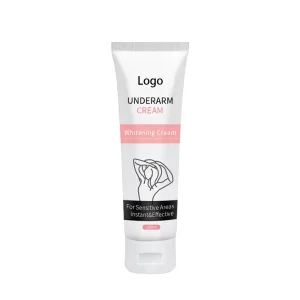
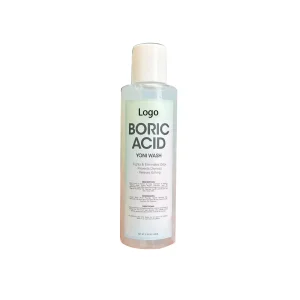
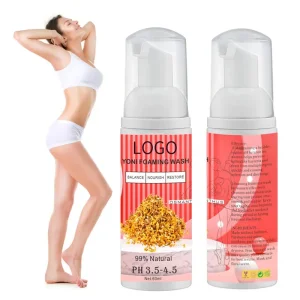
Market-validated core formulas developed through precision cosmetic engineering, turnkey custom blending, and shelf-stable active botanical complexes.


Analyzing structural shifts across the $16.8B global suncare market and why hybrid mineral-tinted emulsions represent the highest consumer retention sector.
The global photoprotection landscape is experiencing a paradigm shift driven by clinical dermatological findings, consumer demand for multifunctional beauty ("skinification"), and strict legislative crackdowns on traditional chemical filters. For decades, beauty brands faced the "Mineral Paradox": physical UV filters like Zinc Oxide (ZnO) and Titanium Dioxide (TiO₂) provide unmatched broad-spectrum photostability and biocompatibility for post-procedure or sensitive skin, yet inherently leave a chalky, unwearable white cast on Fitzpatrick Skin Phototypes III through VI.
As a vertically integrated private label tinted sunscreen factory and OEM partner, Beaza has dismantled this technical compromise. By stabilizing micronized and non-nano zinc oxide with surface-functionalized iron oxides (CI 77491, CI 77492, CI 77499), our advanced compounding methodologies convert whitening reflective particles into unified, skin-tone harmonious tints. Furthermore, peer-reviewed clinical dermatological research confirms that untinted mineral sunscreens fail to absorb High-Energy Visible (HEV) blue light (400–500 nm). The inclusion of iron oxide chromophores acts as an indispensable optical shield against melasma, post-inflammatory hyperpigmentation (PIH), and photo-oxidation induced by visible solar and digital screen radiation.
Unpigmented mineral filters shield effectively against UVB (290–320 nm) and UVA (320–400 nm), but allow visible light to trigger micro-vascular inflammation and long-lasting pigmentation in melanin-rich dermis. Custom OEM tinted sunscreen formulation provides true full-spectrum defense (290–500 nm), turning a simple sunblock into a clinical-grade daily protective foundation.
Non-nano Zinc Oxide dispersion platforms coated with triethoxycaprylylsilane or botanical esters prevent agglomeration, eliminate free-radical oxidation, and secure resilient SPF 30 to SPF 50+ broad-spectrum metrics without chemical sunscreen destabilizers.
Custom-engineered ternary and quaternary iron oxide ratios absorb up to 98% of high-energy visible light. This structural barrier shields melanocytes from micro-stress, significantly mitigating melasma recurrence in clinical user cohorts.
Self-adjusting pigment encapsulation matrices shear upon dermal application, releasing micro-pigments that melt into baseline undertones without oxidation, orange-shift, or greasy transfer onto clothing.
Navigating OTC classifications, maximum active limits, reef-safe mandates, and regional formulation compliance across North America, the EU, APAC, and the Middle East.
| Regulatory Jurisdiction | Classification & Governing Body | Mineral Active Constraints | Iron Oxide & Pigment Rules | Primary Factory OEM Compliance Deliverable |
|---|---|---|---|---|
| United States & Canada | OTC Drug / Natural Health Product (US FDA / Health Canada) | ZnO up to 25%, TiO₂ up to 25% (GRASE Category I) | Exempt from active registration; must comply with 21 CFR color batch release | FDA NDC & Establishment Identifier |
| European Union & UK | Cosmetic Regulation (EC) No 1223/2009 / UK SCPN | Annex VI listed; Non-nano purity criteria; Nano requires SCCS dossier | Cosmetic grade CI 77491/2/9 strictly regulated for heavy metals (Pb < 20ppm, As < 3ppm) | CPNP Notification + PIF + CPSR |
| Australia (TGA) | Therapeutic Goods / Primary Sunscreen (TGA AS/NZS 2604:2021) | Strict broad-spectrum performance (Critical Wavelength ≥ 370 nm) | Treated as excipients; require quantitative disclosure in ARTG listing | TGA GMP Clearance + GMP Audit |
| APAC & Middle East | ASEAN Cosmetic Directive / SASO Conformity (GSO 1943) | Broad filter acceptance; emerging demand for alcohol-free & Halal-compliant bases | High thermal and microbial stability required under Gulf Zone IV conditions | Halal + SASO Certificate of Conformity |
Developing a cross-border private label tinted sunscreen line requires deep mastery over divergent territorial rules. In the United States, tinted sunscreens with SPF claims are classified as Over-the-Counter (OTC) drug products. This mandates that the contract manufacturer hold an active US FDA Drug Establishment Registration, follow 21 CFR Part 211 cGMP validation, execute standardized validated analytical methods (HPLC assay for zinc oxide content), and pass in vivo static and 80-minute water resistance protocol testing (ISO 24444 / FDA Monograph 2011 Final Rule).
Conversely, in the European Union, sunscreen formulations fall under the Cosmetic Regulation (EC) No 1223/2009, demanding rigorous Cosmetic Product Safety Reports (CPSR Part A & B) signed by a certified Eurotox toxicologist, full Product Information Files (PIF), and strict adherence to the COLIPA / ISO 24443 in vitro UVA balance test, where the UVA protection factor (UVA-PF) must equal at least one-third of the declared SPF across all production lots.
How Beaza eliminates ashy undertones, mud-shift, and separation through sub-micron pigment homogenization and lipophilic surface coating.
Formulation Challenge: Tendency of pure zinc oxide to look stark white, combined with high vulnerability to sunburn and erythema.
OEM Solution: Micro-dosed yellow/red iron oxide dispersions that counteract translucent vascular flush while providing ultra-pure, light-diffusing reflection without heavy mask-like coverage.
Formulation Challenge: Susceptibility to grey cast and chalky edge demarcation along hairlines; high prevalence of melasma and uneven pigmentation.
OEM Solution: High-purity yellow iron oxide balances combined with subtle green-undertone chromophores to neutralize olive sallowness, delivering seamless skin tint integration with boosted HEV absorption.
Formulation Challenge: Catastrophic ashy/purple cast caused by high-refractive-index mineral filters; pigment agglomeration creating visible streaking.
OEM Solution: High-aspect coated black and red iron oxide bases suspended in silicone-free emollient networks. Micro-fluidized dispersion guarantees zero white residue, enhancing natural deep dermal radiance.
A multi-year R&D trajectory focused on biocompatible polymers, marine ecosystem preservation, and bio-fermented barrier support.
Transitioning from volatile D5 cyclomethicones to renewable light esters (C13-15 Alkane, Coco-Caprylate). Utilizing inverted Water-in-Oil (W/O) and Polyol-in-Silicone (P/Si) micro-emulsions to achieve featherlight glide and sweat-proof resilience without pore clogging.
Integrating non-endocrine disruptive booster molecules like Butyloctyl Salicylate, Pongamia Pinnata seed derivatives, and Rice Bran wax. These optimize UV photon absorption paths, reducing required active solids by 28% while boosting sensory lightness.
Infusing physiological skin-identical lipid concentrates: Ceramide NP/AP/EOP, Cholesterol, and Phytosphingosine alongside Ectoin and Niacinamide (3%). Transforming daily UV shield formulations into clinical barrier-repair creams.
100% compliant with the Hawaii Reef Bill (SB 2571), US Virgin Islands ban, and Palau Marine Protected Area standards. Formulated entirely without Oxybenzone, Octinoxate, Octocrylene, 4-Methylbenzylidene Camphor, Parabens, or Triclosan.
Operating two self-owned production complexes in Guangzhou, China, adhering to ISO 22716 and US FDA cGMP manufacturing standards.
Collaborative definition of target SPF (30–50+), critical wavelength target (≥370nm), finish parameters (Dewy, Natural, Matte), coverage level (Sheer, Medium, Full), and regional ingredient restrictions (EU Clean, Sephora Clean, Ulta Clean, Whole Foods Standard). Rapid turnaround of bench prototypes within 7 to 10 working days.
Rigorous pre-market testing suite: 12-week accelerated stability at 45°C and 75% RH, freeze-thaw challenge testing (-10°C to +40°C over 5 cycles), centrifuge emulsion stability (4000 rpm for 30 mins), Challenge Preservative Efficacy Testing (USP 51 / ISO 11930), and Human Repeat Insult Patch Testing (HRIPT) for hypoallergenic validation.
Manufacturing in Class 100,000 cleanroom workshops utilizing specialized German-engineered vacuum emulsification homogenizers. Multi-stage rotor-stator high-shear processing ensures that both inorganic UV powders and micronized colorants reach an ultra-fine particle dispersion index, preventing graininess, streakiness, and phase separation.
State-of-the-art automatic airless pump, tube, and dropper filling lines equipped with inert nitrogen purging systems. This protects unstable antioxidants and active botanical extracts from headspace oxidation, ensuring long shelf life, accurate dosage delivery, and pristine packaging aesthetics.
Addressing core technical, regulatory, operational, and commercial questions for beauty brand founders, product managers, and supply chain directors.
Broaden your brand lineup with clinically evaluated, highly compatible skincare and intimate care formulas manufactured to international standards.