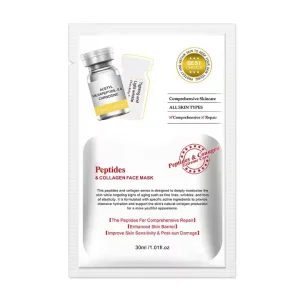
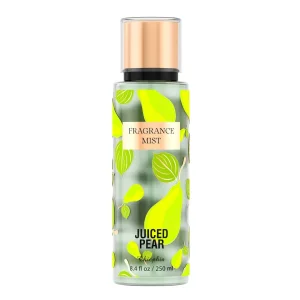
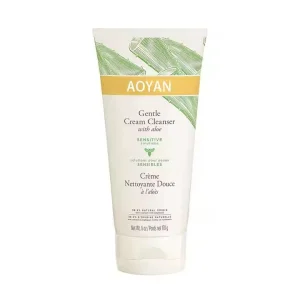
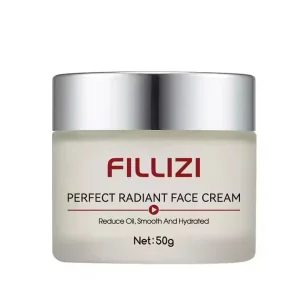
Explore our mature, production-validated private label formulas engineered with pharmaceutical-grade stability, clinical active matrices, and comprehensive export compliance.
A granular analysis of rheological stability, polymer cross-linking systems, and macro-economic demand shifts driving high-yield color cosmetic manufacturing.
The global eye makeup market has transitioned from traditional solvent-borne formulas to water-resistant, ultra-flexible acrylate copolymer cross-networks. Formulating an elite liquid eye liner requires balancing shear-thinning thixotropy: the bulk emulsion must transition instantly to low viscosity under applicator friction to facilitate sharp, skip-free glide, yet immediately recover structural viscosity to prevent bleeds, feathered micro-crevices, and eyelid migration.
Modern B2B brand procurement managers face complex challenges regarding carbon black aggregation and metal oxide settling. Our cleanroom laboratory utilizes proprietary wet-milling nano-dispersion techniques, homogenizing pigment clusters below 0.2 microns. This structural uniformity guarantees intense chromic opacity in a single stroke, bypassing the need for aggressive shaking or ball-bearing agitator systems while dramatically enhancing shelf-life integrity up to 36 months.
Furthermore, clean beauty mandates across Western and East Asian retail landscapes require transitioning from cyclic silicones and harsh paraben complexes toward clean, biomimetic film-formers, such as pulling-resistant polyurethane dispersions (PUDs) and plant-derived polysaccharides.
| Critical Performance Metric | Standard Commercial Grade | Our Factory 4.0 Standard |
|---|---|---|
| Thixotropic Recovery Rate | > 2.4 seconds (bleed prone) | < 0.4 seconds (instant lock) |
| Film Tensile Elasticity | 120% elongation limit | 380% micro-flex elasticity |
| Pigment Grind Fineness | D90 < 5.0 µm | D90 < 0.2 µm (Nano-milled) |
| Smudge/Sebum Resistance | 4 - 6 Hours nominal | 24-Hour transfer-proof verified |
| Heavy Metal Residue | < 10 ppm combined | Undetectable / USP < 1 ppm |
| Cap-Off Latency Time | 15 - 30 minutes | Up to 120 hours without clogging |
Eliminating systemic supply bottlenecks through localized vertical integration, robotic micro-filling lines, and automated real-time vision inspection.
Liquid eye liner pens rely on micro-capillary ink reservoirs and precision delivery valves. Our Class 100,000 cleanrooms deploy automated multi-axis filling robots that meter liquid bulk with ±0.01g volumetric accuracy under positive atmospheric pressure, avoiding air bubbles that cause pen starvation.
Situated in the heart of the Greater Bay Area beauty cluster, our twin manufacturing facilities (Guangzhou Aoyan Cosmetics Co., Ltd. & Guangzhou Xinzimei Cosmetics Co., Ltd.) reduce component sourcing times to hours rather than weeks. Raw chemicals, Japanese fiber nibs, and German-engineered molding dies converge on our floor seamlessly.
Manual eyeliner tip and seal inspection is obsolete. We deploy machine-vision optical scanners that inspect 600 units per minute, evaluating brush bristle alignment, nib symmetry, split hair anomalies, airtight sealing ring seating, and barcode legibility with micrometer precision.
Navigating complex international market clearance, batch reproducibility metrics, and packaging-bulk chemical compatibility matrices.
Global beauty groups require full cosmetic safety portfolios before entering production. We provide comprehensive FDA VCRP registration, EU CPNP notifications with PIF files, CPSR toxicology safety audits, and ASEAN/SASO compliant COA batches.
Eyeliner formulas contain volatile moisture vectors. Incompetent pen packaging results in premature dry-out on retail displays. Our engineering team conducts accelerated 45°C dry-oven weight-loss tests and custom hermetic double-O-ring cap mechanisms.
Because eyeliner is applied millimeters from the tear ducts and conjunctiva, enterprise buyers prioritize ophthalmological safety. We perform 48-hour human repeat insult patch testing (HRIPT), in vitro reconstructed human cornea models, and heavy metal assays.
Whether demanding ultra-fine 0.01mm micro-felt tips for graphic winged liner or multi-filament nylon brush assemblies for flexible pressure manipulation, our procurement catalog offers bespoke tip tension, ink feed porosity, and stroke drag resistance.
A universal eyeliner formula does not exist. We customize bulk polymer blends based on the environmental humidity, skin sebum index, and makeup habits of target geographic regions.
Target: Southeast Asia, Middle East, Latin America
High ambient heat combined with severe relative humidity triggers oil dissolution around eyelid folds. Our tropical formulations feature a high-density silicone-acrylate copolymer network that withstands sweat, sebum surges, and monsoonal humidity without cracking, running, or fading.
Target: North America, Northern Europe, Australasia
Consumers in dry climates often experience micro-dryness, contact lens discomfort, and tight eyelid skin. We engineer moisturizing liquid liners enriched with plant-derived hyaluronic acid, soothing panthenol, and cornflower floral water to ensure a flexible film that never tightens, flakes, or stings.
Target: Professional Makeup Artists & Gen Z Influencer Brands
Ultra-deep chromatic payoff, vinyl glossy sheens, duo-chrome metallics, or extreme velvet matte finishes designed for high-resolution 4K digital video recording, studio spotlights, and 16-hour long-wear editorial shoots without touch-ups.
A transparent 5-stage contract manufacturing pipeline engineered for zero-defect brand onboarding, regulatory validation, and swift mass delivery.
Our cosmetic chemists cross-reference your brand's benchmark requirements (viscosity, drying speed, smudge resistance, and finish) against our 3,500+ master formulation library to build a customized, production-viable sample.
We formulate physical prototypes within 48 to 72 hours, conducting automated drop tests, centrifugal phase-separation diagnostics, freeze-thaw cycles (-10°C to +45°C), and pen-feed consistency verification.
Selection of pen casings, airless cartridges, inner spring valves, tip styles (Japanese porous PE, Japanese PBT bristle, or silicone spatulas), and secondary luxury carton printing (UV varnish, hot-stamping, holographic embossing).
Manufacturing occurs inside ISO 22716 & GMPC-certified cleanrooms. Every bulk batch undergoes micro-biological pathogen testing, heavy-metal spectroscopy, and viscosity index validation before automated filling.
We provide full INCI ingredient listings, certified Certificate of Analysis (COA), safety data sheets (MSDS), and Certificate of Free Sale (CFS), coordinating sea, air, and multimodal logistics directly to your fulfillment warehouse.
Our dedicated account directors track seasonal cosmetic trends, assisting enterprise brand owners in launching limited edition colorways (chromes, pastels, glitters) and line-extension brow and eye care serums seamlessly.
Everything your purchasing department needs to know regarding order volumes, lead times, formula stabilization, and packaging engineering.
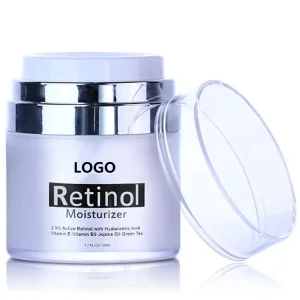
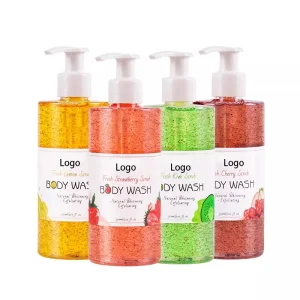
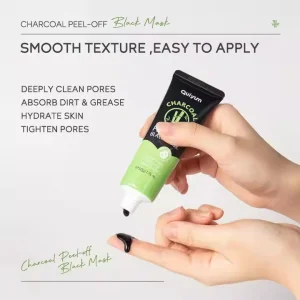
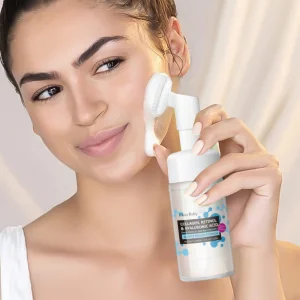
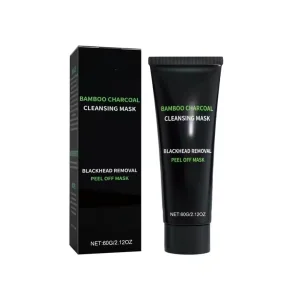
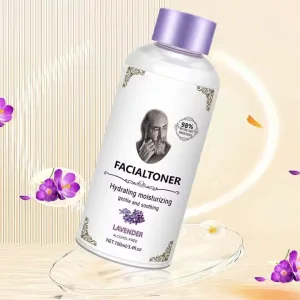
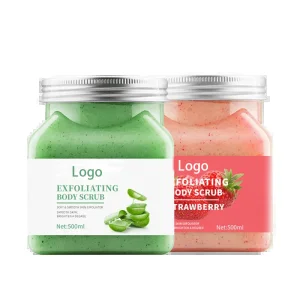
Scalable contract manufacturing options across premium skincare, cleansers, serums, and corrective treatments ready for private label distribution.