
Sourcing Makeup And Skin Care products in 2026 requires more than finding attractive packaging and competitive prices. Buyers must examine formulation quality, supplier transparency, product safety, and market-specific requirements. A polished sample can still hide weak preservation, unstable pigments, or incomplete documentation.
Cosmetic chemist Perry Romanowski writes, “Cosmetics are not drugs.” This distinction matters when evaluating product claims. A supplier promising to “erase wrinkles” or “cure acne” may create serious compliance concerns. Responsible sourcing means checking permitted claims, full INCI ingredient lists, safety assessments, allergen information, and certificates of analysis. Requirements can differ between the United States, European Union, United Kingdom, and other markets.
A reliable sourcing process should include several practical checks. Request samples from the same batch, not only showroom units. Review the manufacturing site, quality system, testing records, and traceability procedures. Ask how the supplier handles microbial testing, stability testing, packaging compatibility, and product recalls. A small jar stored near a sunny warehouse window can reveal more than a glossy catalogue.
Price still matters. However, the lowest quotation may conceal weaker controls or expensive reformulation later. I would also challenge familiar assumptions. “Natural” does not automatically mean safer, and luxury packaging does not prove superior performance. No checklist is perfect. Suppliers change, formulas evolve, and documents can become outdated. Careful buyers therefore verify information repeatedly, record decisions clearly, and test products under realistic conditions before placing substantial orders.
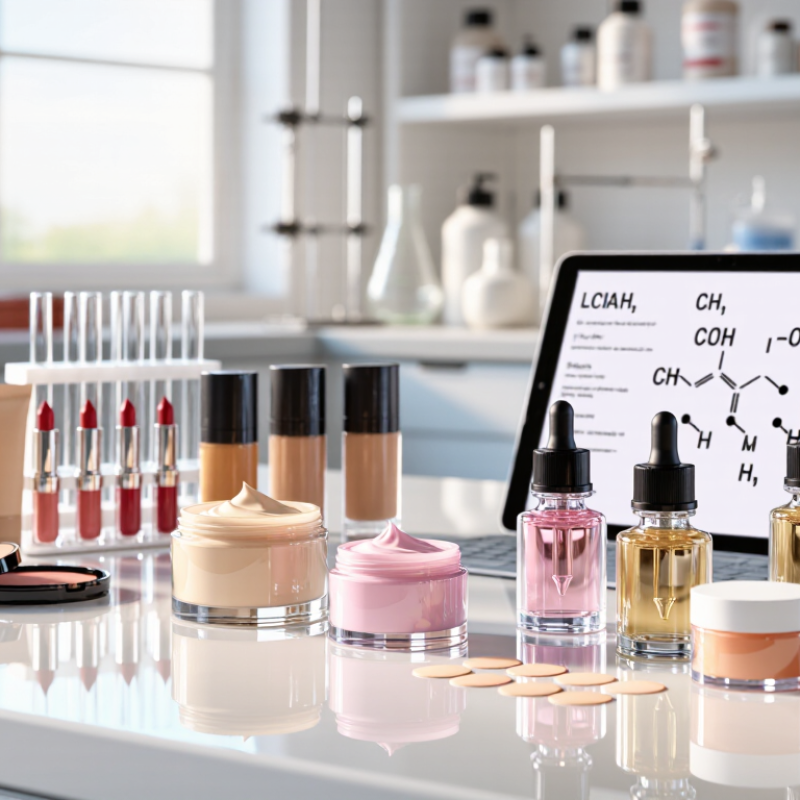
How to Source Makeup and Skin Care Products in 2026?
Define Your Product Sourcing Goals and Target Customers
Effective sourcing begins with a precise customer profile, not a broad beauty category. Identify their age, skin concerns, spending habits, climate, and daily routines. A commuter may need lightweight, sweat-resistant makeup, while a dry-skin customer may prefer fragrance-free creams with richer textures. Record these details before contacting suppliers. Otherwise, attractive samples can distract you from your actual business goals.
Set measurable sourcing targets, such as a specific retail price, minimum order quantity, shelf life, and expected reorder rate. Request ingredient lists, safety documents, stability information, packaging details, and production timelines from each potential supplier. Review samples under realistic conditions. Test texture, scent, shade consistency, application, and packaging durability. My experience is that one attractive sample proves very little. A product may perform well once but fail after several weeks of storage. That weakness must be documented, not ignored.
Tips: Create two customer profiles and compare every sample against them. Ask suppliers how they control batch consistency and handle quality complaints. Keep written records of test dates, temperatures, and results. Small details matter. Also, leave room for revision. Your first customer assumptions may be wrong, especially when feedback reveals different priorities or price sensitivity. Sustainable packaging may sound important, but customers might value easy recycling more than premium appearance. Define the difference before placing an order.
How to Source Makeup and Skin Care Products in 2026?
Research should begin with real customer behavior, not attractive trend headlines. Review search data, retailer feedback, social discussions, and repeat-purchase patterns. Customers increasingly seek gentle formulas, clear ingredient information, refillable packaging, and practical shade choices. Needs change quickly.
Map the market into useful categories: complexion makeup, color cosmetics, cleansers, moisturizers, treatments, sun protection, and tools. Compare demand, price expectations, usage occasions, and return reasons within each category. My early assumption was that “clean” claims would guide every purchase. Customer interviews showed something less simple: many buyers wanted effective products, understandable labels, and proof behind each claim.
Evaluate suppliers through samples and documented evidence. Request full ingredient lists, batch records, stability results, safety assessments, and manufacturing quality procedures. Test texture, scent, color consistency, packaging leakage, and performance under realistic conditions. Use a small pilot order before committing to larger quantities. Test before scaling.
Reliable sourcing also requires checking current cosmetic rules in every target market. Keep records for traceability, product claims, and complaint handling. Avoid copying competitor formulas or vague promises. Trend forecasts can miss regional preferences and budget pressure. I still review failed samples because they reveal weaknesses that polished presentations hide. A product may look excellent in a laboratory, yet feel heavy, dry, or inconvenient during daily use. That gap deserves careful attention.
Global beauty sales are concentrated in skin care, making it the strongest category for sourcing and product development. Makeup remains a significant segment, while fragrance, hair care, and bath products provide additional portfolio opportunities.
Category shares represent the estimated global beauty market mix: skin care 40%, hair care 21%, makeup 17%, fragrance 15%, and other beauty products 7%. Source: McKinsey & Company, “The beauty market in 2023: A special State of Fashion report.”
Sourcing makeup and skin care products in 2026 starts with evidence, not attractive catalogs. Ask suppliers for registered business details, manufacturing addresses, and recent audit records. A video facility tour may reveal clean storage, labeled containers, pest controls, and separated raw materials. Request batch numbers and confirm whether production records match the samples received. Small details matter.
Before placing a large order, obtain complete ingredient lists, product specifications, certificates of analysis, microbiological results, and stability data. Test an independent laboratory sample when possible. Check color, odor, texture, pH, packaging compatibility, and preservative performance. Keep retained samples from every batch. Supplier documents can look professional and still be incomplete. I once trusted a polished specification sheet too quickly; the packaging later reacted with the formula. That mistake remains useful.
Regulatory checks should match the destination market. Review ingredient restrictions, allergen declarations, labeling rules, product notifications, safety assessments, and permitted cosmetic claims. Do not accept a vague “fully compliant” statement. Ask who reviewed the formula and when. Verify good manufacturing practice records, lot traceability, complaint handling, and recall procedures. Digital documentation helps, but it is not proof by itself. A missing signature or unclear test date deserves a written explanation before payment. Supplier approval should remain an active process, not a one-time form.
Sourcing in 2026 requires more than comparing unit prices. McKinsey’s 2023 State of Fashion: Beauty report projects the global beauty market could reach about $580 billion by 2027. Demand is growing, but margins remain fragile. Compare at least three suppliers using landed cost, not factory price. Include samples, packaging, testing, freight, duties, payment fees, and defective units. A $1.80 cream can become $3.40 after delivery. Minimum order quantities often range from 500 to 5,000 units for private label products. Custom formulas may require higher volumes. Confirm these figures in writing.
Lead times usually depend on formula readiness and packaging availability. Ready-made formulas may ship within 8–12 weeks. Custom development can take 16 weeks or longer. Circana reported that U.S. prestige beauty sales grew 8% in 2024, showing strong demand for premium products. However, growth does not guarantee quick inventory turnover.
Ask for stability testing, ingredient specifications, batch records, and recent quality certificates. I would not rely on attractive samples alone. The final production batch can feel, smell, or apply differently.
Tips: Request a pilot order before committing to a large MOQ. Negotiate split deliveries if storage costs are high. Compare private label, semi-custom, and fully custom options separately. Keep 10% extra budget for revisions and delays. It is easy to underestimate packaging lead times. That mistake is costly.
In 2026, reliable beauty sourcing depends on more than a low factory quotation. A strong supply chain connects formulation, packaging, testing, production, and delivery. Begin with a written product brief. Define texture, shade range, ingredient limits, packaging dimensions, target markets, and acceptable tolerances. Ask suppliers for manufacturing licenses, quality certificates, recent audit records, and full batch documentation. Verify each document independently. Paperwork can look perfect.
Request samples from at least two production runs, not only one polished laboratory sample. Check color consistency, scent, spreadability, leakage, pump performance, and label accuracy. For skin care, review stability, preservation, compatibility, and microbiological testing through qualified laboratories. For makeup, assess wear, breakage, contamination risks, and container performance. Confirm that products meet applicable cosmetic requirements in every target market. Keep retained samples from each approved batch. Small details matter.
Build resilience with dual sourcing for critical components, especially jars, pumps, pigments, and cartons. Confirm minimum order quantities, replenishment times, holiday shutdowns, and shipping responsibilities in writing. Maintain a risk register for delays, rejected batches, raw material changes, and sudden demand. Responsible suppliers should explain corrective actions clearly. A vague answer deserves a slower approval. A recurring sourcing lesson is simple: lower cost can hide heavier inspection work. Packaging lead times and demand forecasts are often underestimated. Recheck both assumptions quarterly. Leave room for pilot orders, safety stock, and independent quality checks. A reliable chain is not flawless; it is visible, documented, and able to recover.
| Product Category | Typical Sourcing Format | Indicative Development Lead Time | Indicative Replenishment Lead Time | Typical Initial MOQ | Key Compliance and Quality Documents | Primary Supply-Chain Risks | Recommended Risk-Control Measures |
|---|---|---|---|---|---|---|---|
| Facial Serums | Stock formula, customized formula, or private-label finished product | 8–16 weeks for formula adaptation, testing, packaging, and approval | 4–10 weeks after formula and packaging approval | Approximately 1,000–5,000 units | Ingredient list, product specification, stability data, microbiological test, safety assessment, batch certificate, packaging compatibility report | Medium | Use airless or sealed packaging where oxidation is a concern; approve retain samples; require batch release testing and documented shelf-life controls |
| Moisturizers and Creams | Ready-made base with approved fragrance, texture, or active-ingredient modifications | 8–14 weeks | 4–8 weeks | Approximately 1,000–5,000 units | Formula specification, stability testing, preservative efficacy test, microbial limits, safety file, net-content verification | Medium | Conduct freeze–thaw and accelerated stability tests; verify preservative performance; maintain temperature-controlled storage when required |
| Cleansers | Private-label liquid, gel, foam, oil, or powder cleanser | 6–12 weeks | 3–8 weeks | Approximately 1,000–10,000 units | Ingredient list, product safety assessment, microbial test, stability report, packaging compatibility test, production batch records | Low to Medium | Test pump performance and leakage; control viscosity specifications; keep a second packaging option for pumps, caps, and closures |
| Sunscreens | Regulated finished product with market-specific UV testing and labeling | 16–32 weeks or longer, depending on target market | 6–12 weeks | Approximately 2,000–10,000 units | UV protection test, broad-spectrum or applicable efficacy evidence, safety assessment, stability data, ingredient compliance review, regulatory product notification or registration where required | High | Confirm regulatory requirements before development; avoid unsupported SPF or water-resistance claims; use independent laboratories for critical efficacy tests |
| Lipsticks and Lip Balms | Standard color base, custom shade development, or anhydrous balm formula | 8–16 weeks | 4–10 weeks | Approximately 2,000–10,000 units | Color and shade standard, heavy-metal screening where applicable, stability data, packaging compatibility, safety assessment, batch specification | Medium | Approve physical color standards; test melting point, sweating, breakage, and pay-off; source compatible tubes and molded components |
| Foundation and Concealer | Stock shade range, custom shade matching, or modular formula development | 12–24 weeks | 5–12 weeks | Approximately 2,000–10,000 units per shade | Shade standard, color stability data, microbial test, skin-safety assessment, packaging compatibility, viscosity and fill-weight records | High | Limit the launch shade count until demand is proven; use standardized shade panels; monitor pigment availability and component allocation |
| Powder Blush, Bronzer, and Eyeshadow | Pressed powder palette, single pan, loose powder, or custom color collection | 10–20 weeks | 5–10 weeks | Approximately 2,000–10,000 units | Color specification, talc or mineral documentation where relevant, microbial test, breakage test, pan adhesion test, safety assessment | Medium | Perform drop and vibration testing; validate pan adhesion and powder hardness; maintain approved pigment alternatives for supply interruptions |
| Mascara and Liquid Eyeliner | Stock formula with customized brush, shade, packaging, or performance profile | 10–18 weeks | 5–10 weeks | Approximately 2,000–10,000 units | Microbiological test, preservative efficacy test, eye-area safety assessment, packaging compatibility, brush performance test, stability data | High | Use strict microbial controls; test wiper fit and brush loading; establish accelerated aging and package-leakage acceptance criteria |
| Sheet Masks | Pre-cut substrate with standard essence or customized serum impregnation | 8–16 weeks | 4–8 weeks | Approximately 5,000–20,000 pieces | Material specification, essence stability data, microbial test, preservative efficacy test, package seal test, safety assessment | Medium | Test substrate compatibility and liquid retention; inspect seal integrity; use lot-level microbial testing and controlled warehouse conditions |
| Packaging Components | Standard bottles, jars, tubes, pumps, caps, cartons, labels, and inserts | 6–14 weeks for standard components; 12–24 weeks for custom molds | 4–10 weeks | Approximately 3,000–20,000 pieces | Material declaration, component drawing, color standard, dimensional report, migration or compatibility data where relevant, artwork approval | High | Approve golden samples; dual-source critical components; hold safety stock for closures and pumps; inspect dimensions before mass production |
| Natural or Sensitive-Skin Products | Formula emphasizing restricted ingredients, mild surfactants, or plant-derived materials | 10–20 weeks | 5–12 weeks | Approximately 1,000–5,000 units | Full ingredient traceability, allergen review, contaminant testing, stability data, safety assessment, substantiation for natural or sensitive-skin claims | High | Qualify raw-material suppliers; verify botanical identity and contamination controls; avoid broad claims unless supported by documented evidence |
| Contract Manufacturing and Filling | Finished-product manufacturing, filling, labeling, packing, and batch release | Supplier qualification typically requires 4–12 weeks before production | Production scheduling commonly requires 3–10 weeks | Varies by formula, line capacity, and packaging format | Quality agreement, good manufacturing practice evidence, audit report, batch records, deviation procedure, recall procedure, certificate of analysis | High | Audit before approval; define change-control rules; use purchase specifications and service-level agreements; conduct pre-shipment inspections |
| International Freight and Warehousing | Consolidated ocean freight, full-container freight, air freight, bonded storage, or regional fulfillment | Planning should begin 4–8 weeks before the required delivery date | Ocean freight often requires several weeks; air freight is faster but more costly | Based on carton, pallet, or container capacity | Commercial invoice, packing list, transport document, customs classification, country-of-origin data, dangerous-goods documents where applicable | High | Use landed-cost modeling; maintain inventory visibility; diversify transport routes; apply carton and pallet standards; define temperature and humidity limits |
Record age, skin concerns, budget, climate, and daily routine. A commuter may need lightweight, sweat-resistant makeup. A dry-skin customer may prefer richer, fragrance-free creams. Keep two customer profiles for comparison.
Set a target retail price, minimum order quantity, shelf life, and reorder rate. Write these numbers down. Otherwise, attractive samples may distract you from practical business needs.
Request ingredient lists, safety assessments, stability results, batch records, packaging details, and production timelines. Ask how the supplier controls batch consistency. Also ask how complaints are handled.
Test texture, scent, shade consistency, application, leakage, and packaging strength. Store samples under realistic conditions. Record test dates, temperatures, and results. One beautiful sample proves very little.
Review search behavior, retailer feedback, customer discussions, and repeat-purchase patterns. Compare practical needs, not only trend headlines. Customers may value clear labels and proven performance over fashionable claims.
Compare complexion makeup, color cosmetics, cleansers, moisturizers, treatments, sun protection, and tools. Review demand, prices, usage occasions, and return reasons. Categories behave differently.
Use landed cost instead of factory price. Include samples, packaging, testing, freight, duties, payment fees, and defective units. A low unit price may become expensive after delivery. Check the final calculation twice.
Private label orders may require hundreds or thousands of units. Ready-made formulas may take eight to twelve weeks. Custom development can take sixteen weeks or longer. Confirm every estimate in writing.
Compare each option by cost, control, timing, and minimum order quantity. Start with a pilot order when possible. Custom formulas can better match customers, but they may consume more time and cash.
Request a pilot order and inspect the final production batch. Consider split deliveries when storage is limited. Keep about ten percent extra budget for delays and revisions. I would not assume the first plan is correct. Customer feedback may change it.
Sourcing Makeup And Skin Care products in 2026 begins with clear business goals and a detailed understanding of target customers. Define the product range, price position, quality expectations, and preferred customer benefits before contacting suppliers. Then research current market trends, emerging product categories, ingredient preferences, packaging expectations, and unmet customer needs. This groundwork helps you select products with genuine market potential rather than relying on assumptions.
Next, evaluate suppliers carefully by reviewing product samples, manufacturing capabilities, quality-control processes, safety documentation, and regulatory compliance for your target markets. Compare pricing, minimum order quantities, production and shipping lead times, payment terms, and private-label services. A reliable supply chain should also include clear communication, consistent quality checks, realistic inventory planning, and backup supplier options. By combining customer-focused research with careful supplier verification and cost analysis, businesses can build a flexible, transparent, and dependable Makeup And Skin Care sourcing strategy for 2026.
